Turkey has long stood out among emerging markets (EMs) due to its unique economic trajectory. Spanning both Europe and Asia, this intercontinental nation has charted an unconventional course, distinguishing itself from its peers. During the global financial responses to the COVID-19 pandemic, when many countries unleashed substantial stimulus packages and engaged in monetary easing to safeguard their economies, Turkey followed suit but with a twist. While other nations quickly recognized the dangers of rising inflation and adjusted their policies, Turkey largely disregarded these warning signs. Instead, it embarked on a distinctive economic experiment, characterized by unconventional monetary policies that contrasted sharply with global norms, thus setting the stage for a fascinating case study in economic resilience and adaptation.
In this economic experiment, Turkey, under the leadership of the President, pursued a policy of lowering interest rates in the face of rising inflation, an approach that went against traditional economic theory which advocates for higher rates to curb inflation. This unorthodox strategy aimed to stimulate growth through cheaper borrowing but resulted in significant currency depreciation of the Turkish Lira. To counteract the effects, the government implemented measures like foreign exchange reserves interventions and regulatory adjustments to manage capital flows. However, these actions led to high inflation rates, peaking at levels not seen in decades, and a volatile economic environment. Following the 2023 elections, Turkey shifted towards more conventional economic policies, with the Central Bank raising interest rates significantly to fight inflation and stabilize the currency, marking a departure from the previous years’ experimental tactics.
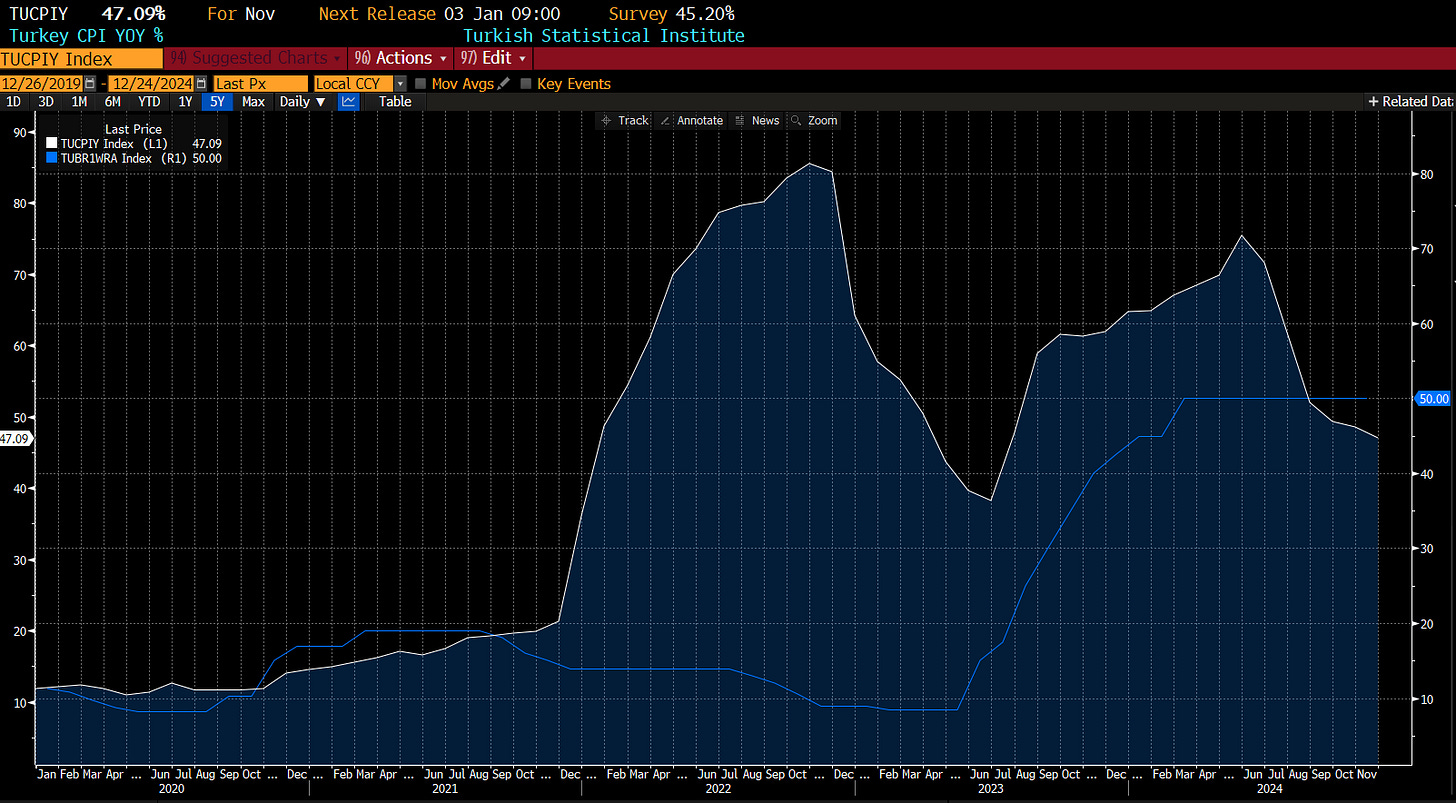
During the normalization process, several significant changes have occurred. The Central Bank began hiking policy rates to combat inflation, which had reached historical highs. The Credit Default Swap (CDS) rate started to decline, signaling an improvement in the country’s risk profile. Although high interest rates have strained corporate balance sheets, enhanced foreign relations and limited capital inflows have bettered the macroeconomic landscape, thus reducing the systemic risk for most companies.
The banks have been the primary beneficiaries of this improving outlook. The decrease in CDS rates has lowered the cost of foreign currency funding, while also reducing the overall risk profile of the banks. Currently, market participants are experiencing a moderate level of liquidity, credit, and default risk compared to the more volatile, unorthodox periods. As a result, bank balance sheet projections have improved, and, as one might expect, so have their share prices.
It’s evident that the banking sector won’t be the only one to benefit from the improving economic conditions. Numerous industries have been stuck with depressed valuations for years, if not decades. Alleviating systemic risks could unleash a potential that has been constrained for too long, with the telecom industry being a compelling example. The sector is ripe for opportunity due to pent-up demand for advanced telecom services, the advent of 5G technology offering a chance to leap ahead, and supportive government policies aimed at economic normalization. Moreover, the industry is pretty much an oligopoly, making it almost impossible for new entrants. This scenario not only promises recovery but also significant growth and transformation, making the telecom industry in Turkey a focal point for both local and international investors looking for the next big opportunity.
Telecom Industry
The Turkish telecom sector is characterized by intense competition, with well-positioned players across various segments. In the mobile market, Turkcell (TCELL) leads with a 41.1% market share, followed by Vodafone at 30.6%, and Türk Telekom holding 28.2%.
Turkcell (TCELL) has solidified its position as the market leader not only through its significant market share but also by focusing on technological capabilities. By bringing global technological advancements to Turkey, TCELL is well-placed to further strengthen its leadership in Turkey’s digital transformation. This involves innovations in mobile technology, expanding its network infrastructure, particularly with the advent of 5G, and offering cutting-edge services to consumers and businesses alike.
Dive into the dynamic world of Turkey’s telecom industry, where one-year commitments weave a complex tapestry of strategy and adaptation. These commitments, acting as both a sword and shield, dictate how telecom giants negotiate with suppliers, pamper customers, and dance to the tune of regulatory bodies regarding service quality, pricing, and mammoth infrastructure projects. Here’s the twist: in a country like Turkey, where agility is key, this seemingly long one-year contract can feel like an eternity. It shackles companies, potentially leading to a revenue dip as they’re stuck with outdated pricing models until the commitment’s end. Yet, the stars allign in times of disinflation. This system inadvertently crafts a strategic advantage, allowing telecom companies to ride the wave of decreasing inflation, creating a sweet spot where price adjustments lag behind, offering a boost to profitability.
The current economic climate in Turkey presents a strategic advantage for the telecom industry. Given that the sector’s liabilities, investments, and operational costs are predominantly denominated in foreign currencies (FX), while the majority of its revenue is collected in Turkish Lira (TL), the industry benefits from two key dynamics. Firstly, the appreciation of the Turkish Lira enhances the value of TL-denominated revenues, particularly those secured through one-year commitments, thus fortifying company balance sheets. Secondly, the strengthening of the TL reduces the necessity for currency hedging, thereby lowering associated costs and risks. This confluence of factors positions the telecom sector favorably within the current economic framework, potentially leading to improved financial performance and stability.
Interestingly, despite these positive aspects, TCELL has not kept pace with Turk Telecom in terms of stock performance this year. While Turk Telecom has seen an impressive rise of 82.85% year-to-date, Turkcell’s shares have grown by 59.04% in the same period. This relative underperformance might make TCELL appear as a more appealing investment to those hunting for value in the market. As a result of the underperformance, TCELL stands out as a better alternative with its better multiples on 2024e & 2025e EV/EBITDA, its low Net Debt/EBITDA ratio during sky high interest rate regime, decent dividend yield and the latest big bulk of buyback that both aims to return money back to their shareholders.
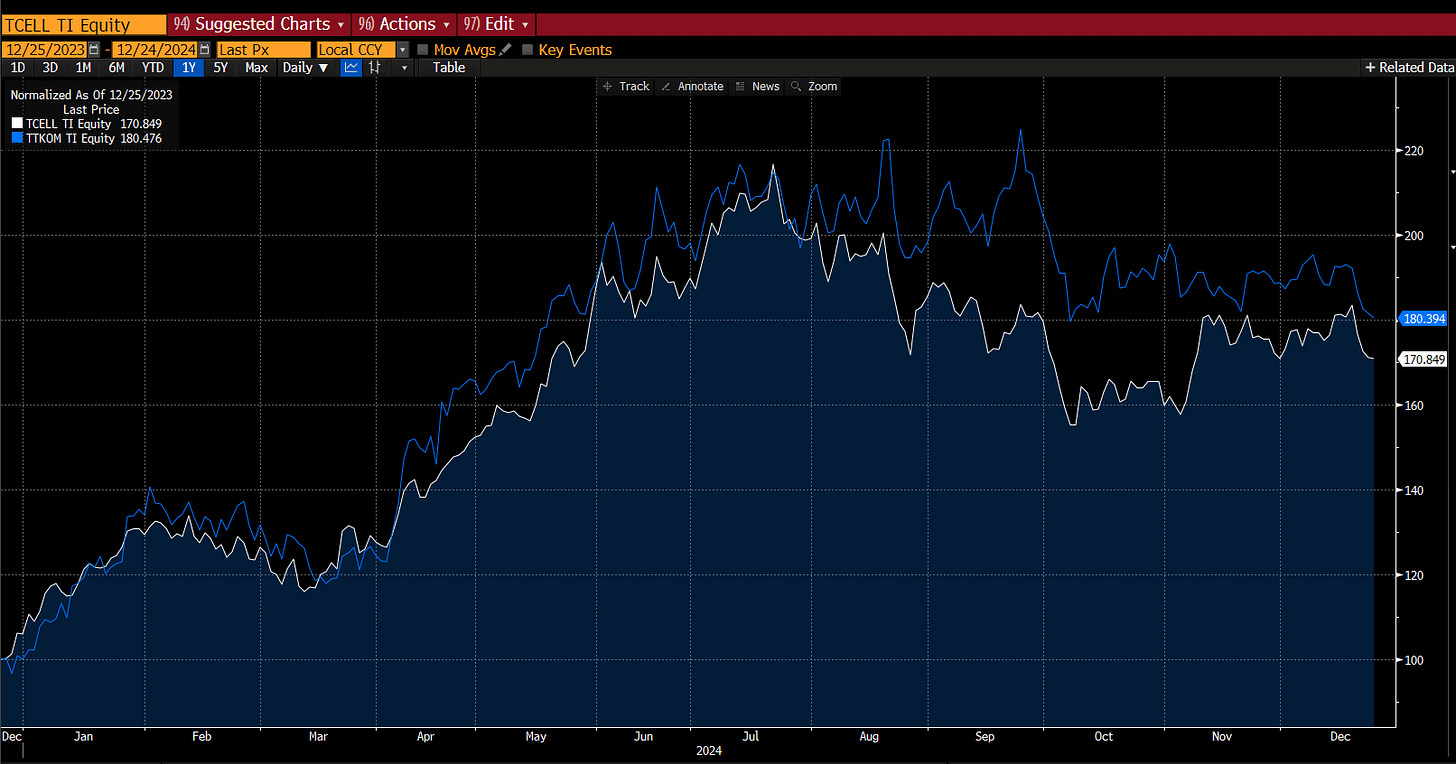
TTKOM & TCELL Share Price (Normalized)
This system inadvertently crafts a strategic advantage, allowing telecom companies to ride the wave of decreasing inflation, creating a sweet spot where price adjustments lag behind, offering a boost to profitability.
Now, let’s delve deeper into Turkcell’s financials to truly understand if this perception holds up. Exploring the world of valuation, we’ll examine how these figures translate into real investment opportunities, giving us a clearer picture of whether Turkcell is indeed the good bet in the Turkish telecom industry.
Turkcell, What to Expect?
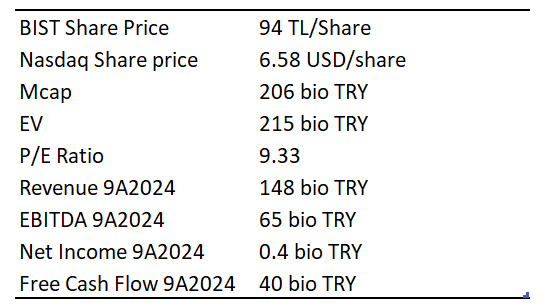
Turkcell, officially Turkcell İletişim Hizmetleri A.Ş., began operations in February 1994, marking the start of GSM-based mobile communication in Turkey. It signed a 25-year GSM license contract with the Ministry of Transportation in April 1998. Over the years, Turkcell has expanded its services beyond mobile voice and data to include digital services, becoming a regional leader in several countries like Azerbaijan, Kazakhstan, Moldova, and Georgia through its subsidiary Fintur. Turkcell was the first Turkish company to be listed on the New York Stock Exchange (NSDQ: TKC, IST : TCELL), with shares trading there since July 11, 2000. Here is a recap of the latest financial information about the company:
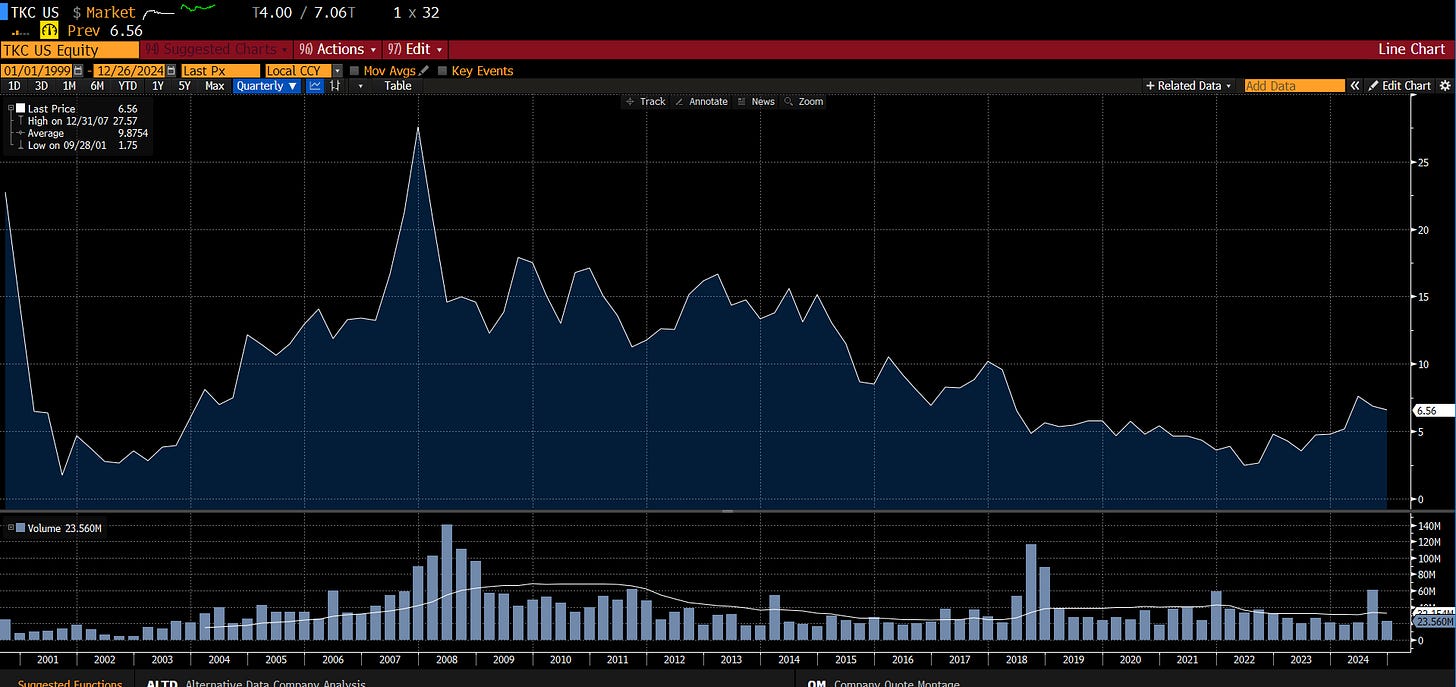
Turkcell Share Price in USD (NSDQ:TKC)
Since its peak in 2008, Turkcell’s share price has been on a steady decline until mid-2023, when the trend reversed. Amidst a favorable economic outlook, the share price has more than doubled. Yet, there remains significant potential for growth, my estimation predicting another 150% increase to reach what’s considered its normal range.
Current market conditions are advantageous for Turkcell; the Turkish lira is gaining real value against the US dollar, and the company’s healthy cash flow supports shareholder value through growth, buybacks, and dividends. Turkcell is expected to see a 56% growth in 2024 with a dividend yield of 3.10%. Furthermore, in August, the company bought back shares worth 300 million TRY at 99.87 TRY each, the largest buyback since one and a half years ago when shares were repurchased at 33.88 TRY.
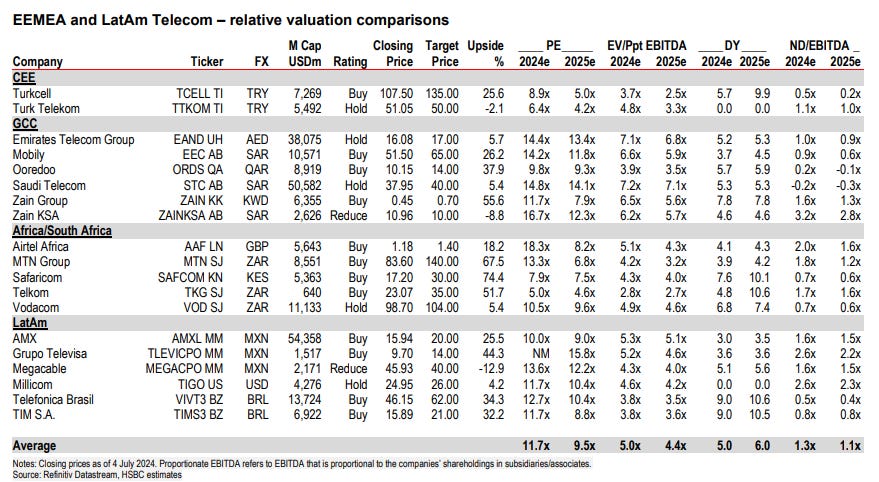
When we look at Turkcell alongside other telecom giants in emerging markets, it’s priced attractively with a forward P/E ratio of just 5.0x, which is a whopping 45% discount compared to its competitors. This positions Turkcell as not just a bargain but a stock with potential for significant returns. HSBC predicts that this year, Turkcell will not only outshine its peers with a higher dividend yield but also maintain a healthier financial stance with lower net debt.
Now, let’s dive into how Turkcell’s valuation could shift with varying market conditions, exploring the sensitivity of its stock price to these changing assumptions. This analysis could reveal just how much value is hiding for investors:
Let’s break down how we’re going to figure out Turkcell’s worth using two straightforward methods: the traditional Discounted Cash Flow (DCF) analysis and an EBITDA multiple method, which looks at what the company might be worth if someone wanted to buy it out.
Here’s what I am considering as the key inputs:
-
Revenue Growth: We expect Turkcell’s revenue to grow, but not as fast as Turkey’s inflation rate might suggest. We’re projecting a 46.6% increase in 2025, slowing down to 35% in 2026, and then 30% in 2027. This reflects a cooling down of prices in Turkey, but with a bit of delay.
-
Terminal Growth Rate: Looking at how well Turkcell has done in the past when the Turkish Lira was strong and economic policies were more conventional, we’re setting a growth rate at 20% for the long term. This is because between 2008 and 2015, they easily hit 25% growth, showing they can really expand when conditions are right.
-
WACC (Weighted Average Cost of Capital): We’re using a 30% rate for our calculations, which is on the cautious side. Most big banks are a bit more optimistic with a 25% rate, but we’re playing it safe here.
-
Tax Rate: We’re sticking with the current corporate tax rate in Turkey, which is 21%.
-
EBITDA Margin: We expect Turkcell to keep making a profit at around 40% of their revenue, similar to their recent performance.
-
Capital Expenditures: Every year, Turkcell is expected to reinvest 20% of its sales back into the business, which is typical for a company looking to keep up with technology and competition.
After plugging all these numbers into our models, here’s what I have found with the discounted cash flow model:
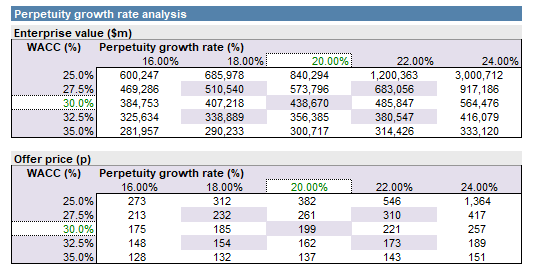
The current share price of the company is 94 TRY per share, but its valuation suggests it’s worth much more. Even in a worst-case scenario, where the terminal growth rate is only 10% and the Weighted Average Cost of Capital (WACC) is a high 35% (considering Turkey’s 10-year government bond yield is at 29%), the share value would still be worth 118 TRY. This shows that the company is currently significantly undervalued.
In my base case scenario, with a WACC of 30% and a perpetual growth rate (PGR) of 20%, we’re looking at a potential increase of 112% in share value. For those skeptical about a 20% perpetual growth rate in Turkey’s inflationary environment, here’s what the numbers look like if we adjust the PGR to 10%:
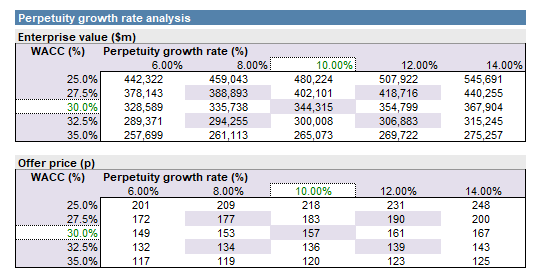
Another approach is to compare EBITDA multiples to check if our Discounted Cash Flow (DCF) analysis aligns with telecom companies in the EMEA and Latin America regions. In the US, telecom service companies currently have an EV/EBITDA multiple of 6.09x, while in emerging markets, this multiple stands at 5x. Using an EV/EBITDA multiple of 5x and a WACC of 30%, here’s what I’ve discovered:
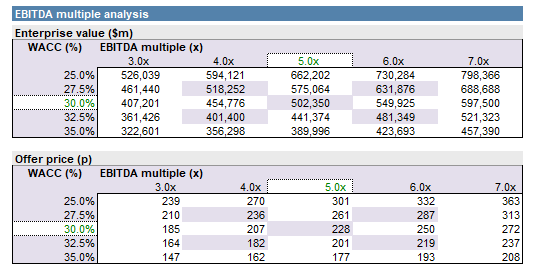
It resulted with a similar valuation which ensured me about the accuracy of my estimates. (Of course no result can completely “ensure” somebody). However, it laid a good foundation that the current value of Turkcell is undervalued and the stock price indicates a good amount of upside where the catalysts are in line with the current macroeconomic developments.
If you’ve spent a chunk of your precious time diving into my Turkcell thesis, I sincerely salute you, dear reader! Thanks for hanging in there, and see you in the future analyses :)
Thanks for reading Behiç’s Substack! Subscribe for free to receive new posts and support my work.
DISCLAIMER: The material published in this report is part of a website that is a personal blog. Neither the article nor the website is a regulated financial advisor in any jurisdiction